Hitha Palepu, CEO of Roshan Pharmaceuticals
For my next interview Tiny CEO interview, I talked with Hitha Palepu, the CEO of Roshan Pharmaceuticals. Hitha is also the author of two books: How to Pack and We’re Speaking: Life Lessons from Kamala Harris.
How did you get your start in business? Did you always know that you wanted to become a CEO?
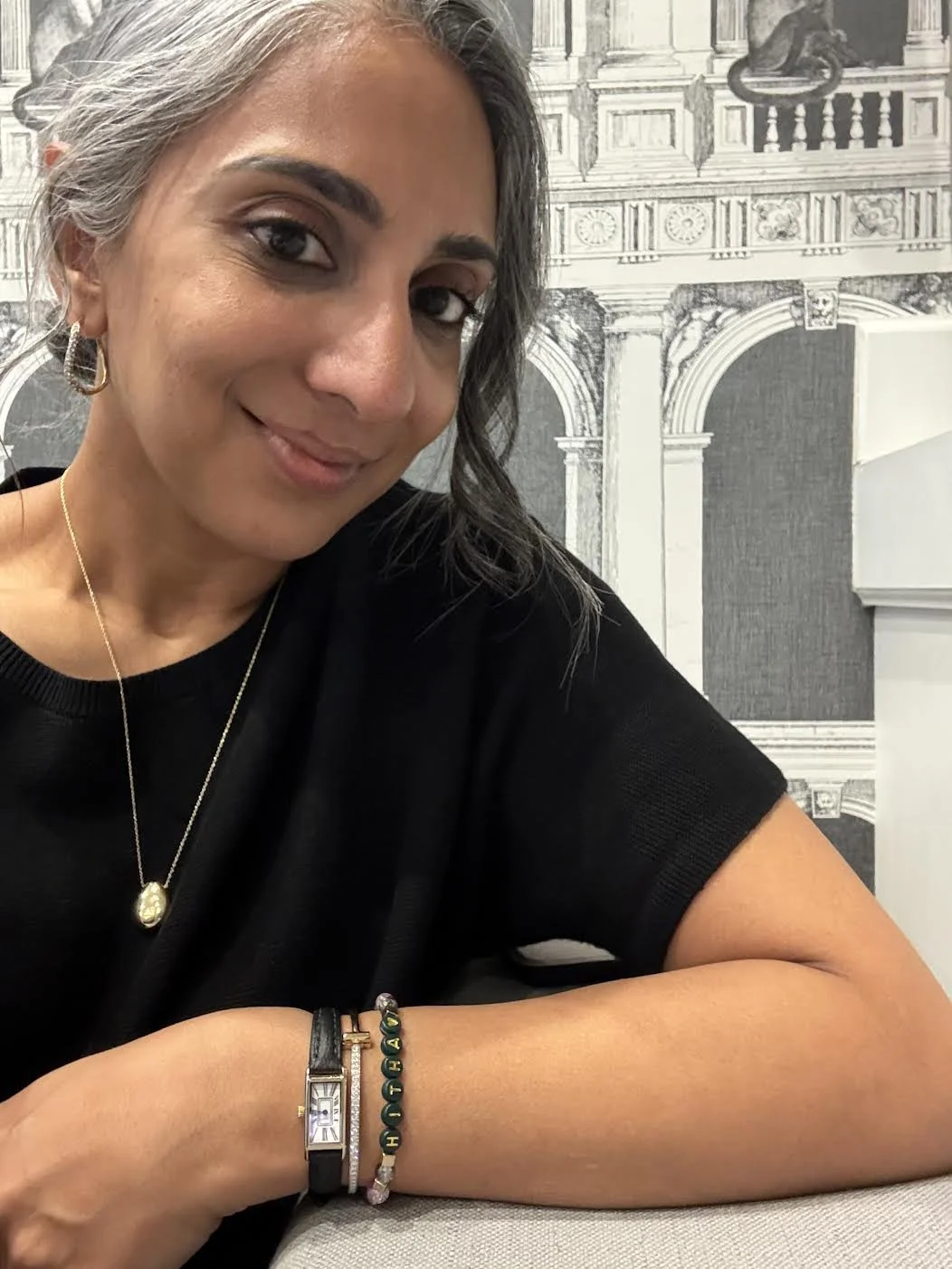
I didn't. I thought I was going to be a doctor or a lawyer, and I went to college fully intending that I would do one or the other. I studied chemistry and history, and I quickly realized that I did not want to go to more school after college. I wanted to enter the working world. I had done a lot of business internships in college and really enjoyed how fast-paced it was compared to doing research or writing big papers. I figured the best way to get that crash course working in business would be to go into sales.
I started my career at Cisco in technology sales, and after a year of training, I was assigned to the Global Pharmaceuticals team. At the time, my father had spent my whole life and years before working in the biopharmaceuticals industry. I had a view of what he did in that industry as a kid, so I had a unique perspective coming into the global pharma team. After a couple years, I realized I wanted to be in pharma versus being a vendor in pharma. At the time, my dad's company started to really grow, and around 2009, he and his business partner asked if I would jump in and help grow and scale the company. I said yes, and I haven't looked back.
What does Roshan Pharmaceuticals do?
We are developing an injectable version of aspirin to be given to patients at risk of a heart attack. It’s also being given before a number of the big cardiovascular procedures; for example, getting a stent put in or getting an angioplasty. We have been working on this product since the end of 2016.
You’re also a published author! Your book, How to Pack, is one of my sister’s favorite books, and we use it all the time to pack for our trips. How did you get the idea to write that book?
When I first started working at STOs, which was our first pharma company, I was traveling all the time. My apartment in New York City was basically a glorified closet. My husband also was traveling all the time for work. I made a lot of packing mistakes. I checked in my bags when I didn't need to, I'd pack the wrong shoes to walk a conference hall or to visit a manufacturing facility, etc. I started a blog because I also knew I needed a creative outlet while I was doing a very technical role at work. In the beginning, the blog was similar to everybody else’s blog, it was like a little bit of fashion, a little bit of food. When I started writing about packing and how I was packing for these trips, the blog really took off! I was approached by my publisher to write How to Pack in 2015, and the book came out two years after that.
You also published a book in 2021: We're Speaking: The Life Lessons of Kamala Harris. What gave you the idea to write that book, and why is it especially important to you?
I am a very lucky author in that I also got approached to write this very specific book. We’re Speaking is a compilation of Kamala quotes and valuable lessons on life, work, and overcoming adversity drawn from Democratic Presidential nominee Kamala Harris’s norm-shattering ascent.The reason for this is largely because when I stopped blogging, I pivoted to creating a series called #5SmartReads, which curated five underreported news stories or perspectives and shared them every day on social media. Later I wrote a lot about the 2020 election, both from the democratic primary perspective, as well during the general election. I have been a big Kamala Harris fan from the get-go, and I related not just to where she stood on policy, but also how I felt represented and seen by her being South Asian.
Combining biography with personal development is not something most people do. Authors usually sit in one or the other lane, but my editor thought I would do a good job of melding both. They had a very specific book in mind, and truly it was a dream book project. I think it's even more important now because it's a constant reminder to not let other people define you and to break out of the mold that a lot of women are put into because it's comfortable for men to understand. It’s about embracing all of your multitudes, your passions, and to fight for something much bigger than ourselves.
On your Instagram profile, you say that you are a “multi-hyphenate”? What does that mean?
I call myself a multi-hyphenate because I refuse to be defined by one thing, and I think all of us should be that way. It's my way of owning my many roles and passions all at once and letting people feel like they can do the same. It's a part of me and how I introduce myself when I meet someone new. It’s also how I have conversations both with new contacts and old friends to make sure I'm asking how they are, what they are interested in right now—not just how work is going. I believe in making the most of this one life we all get, and to do so in a big, bold, brave way, versus shrinking myself into a box that makes other people feel comfortable.
What is the hardest part of your job?
The hardest part of my job is that there are a lot of moving parts. When you're developing a medication, you're running a clinical trial program corresponding with the FDA manufacturing program, sometimes animal studies, meeting with payers and insurance companies to ask, “Will you reimburse us for this product?” It's a lot of things all at once as CEO, and it's my job to make sure everything is running in the right direction and moving forward, even if there are going to be delays and things are going to cost more than ever. I need to think five steps ahead and ask, “If this goes wrong, what's our plan?”
What is your favorite part of your job?
All of the moving parts are also my favorite aspect of my job! I think I love puzzles by nature. Drug development is the biggest, most complicated puzzle you could ever think of. It's a really hard job, but it's also fulfilling because what we are doing is life and death. This can save someone's life, and if it's not developed properly, it could cause great harm. We take what we do very, very seriously, but there is also the fact that what we're developing is so much bigger than any one of us. If we're successful and the data shows that we're successful, we can make a really big impact in people's lives.
Who is your favorite woman role model?
I have many! I would say obviously Kamala Harris, given that I wrote a book about her! Catalan Ko was one of the leading inventors of MRNA technology, from the COVID vaccine to what we're seeing today of MRNA being used in cancer vaccines. I think she's a brilliant scientist. She could have easily retired and just chilled by now, but she's still very much on the front lines of research and building this new sector of science. Emma Wamsley was one of the first women CEOs of a major global biopharmaceutical company, and I think she did an excellent job of running and growing GlaxoSmithKline in a way most men are not traditionally leading and running pharmaceutical companies. That said, there are some good men, too. Vos Naim at Novartis has done a really great job of balancing really cutting edge science and investing in that future, while also seeing the value of existing products and building a really solid generics business.
Do you have any advice for young entrepreneurs like me who are trying to start a successful first business?
Yes. We need you! So jump right in. Manage your cash very wisely. I would always focus on being profitable versus growing revenue first. Especially when it comes to a jewelry brand or whatnot, we can get really focused on, “How much money am I making in general” without thinking about, “What's the cost of making this money?” Focusing on profitability versus revenue is going to help you be a better leader in whatever you do next.
Get comfortable selling; literally everything is sales.Your parents might hate me for what I'm about to tell you, but practice negotiating all the time. Always asking for something scares you because that's usually the right number or the right thing to ask for. Know your facts and be able to back up your data and tell a really good story. I think storytelling is so important in any business and anything you do. Don't be afraid to be told no, no is just a starting point and tell the stories you wish you were listening to. You're going to be incredibly successful.
What is your favorite book you’re reading? (I know you read a lot, I do, too!)
Speaking of storytelling, it's the nonfiction book I'm reading right now, called The Storytellers Advantage by Christina Farr. She is a healthcare investor and journalist and the book is an excellent storytelling book, designed for people in life sciences on how to be better storytellers.
Sometimes we don't do a good job of telling our story through fiction. This time around, I am rereading the Aru Shah series, since it’s Diwali time. It just reminded me of how much I love that series. So it's a good one!